How Vampires Are Made
From Slavic graveyards to streaming series — every method humans have invented to explain how the dead come back thirsty.
For as long as people have buried their dead, they have worried about the dead coming back. Every culture that produced vampires also produced an answer to the same question: how does it happen? The answers vary wildly. A bite. A curse. A bad burial. A bargain. A virus. A blood transfusion in a Manhattan penthouse. What follows is a tour through every major theory humanity has offered — and what storytellers do with it now.
The Folkloric Origins
Long before novels and movies, vampires lived in graveyard whispers. The methods of becoming one were never about glamour — they were about everything that could go wrong at the end of a life.
Bad Deaths and Improper Burials
The oldest vampire traditions came from Slavic and Balkan villages, where vampirism was a fate, not a fashion. Suicide victims, the excommunicated, the unbaptized, those who died violently or alone — any of them might rise. So might anyone whose grave was crossed by a black cat, or whose burial skipped the proper rites. The vampire was less a monster than a reminder that the line between life and death required maintenance.
Born With a Caul, Born With Teeth
In Romania, you didn't have to die to be marked. Strigoi could be born — the seventh child of a seventh child, an infant born with a caul or with teeth, a baby conceived during a holy week. Witches' curses worked too. Folk practitioners watched newborns for signs of the wrong kind of life, and watched the dying for signs they wouldn't stay that way.
Excommunication and Sin
Greek tradition tied vampirism to the church. To be excommunicated was to be denied the rest of the grave. The vrykolakas walked because the body could not decompose, and the body could not decompose because the soul had not been released. Eating meat from a sheep killed by a wolf could do it too. So could dying with too much unfinished sin.
Unkept Promises, Unfinished Lives
Across Roma communities and Western European folk belief, a vampire was often someone whose life had been cut off mid-sentence. Dying unmarried. Dying with unpaid debts. Dying angry. A mother stepping over an unburied corpse could doom her child. The dead, in these stories, were owed something — and would come collect.
The Bite — Older Than All of It
Underneath every regional variant, the bite endured. Drink from the dead and you join them; be drunk from and you may rise. It is the simplest and oldest explanation, and the one that survived every other tradition's collapse. Every novel and movie that followed inherited it.
"There are mysterious things in heaven and earth that have nothing to do with theology, and only the simplest peasant can sometimes see them clearly."— Montague Summers, The Vampire in Lore and Legend
The Literary Canon
Once the vampire entered fiction, authors had to be specific. Folklore could leave the mechanism vague. A novel needed rules. The result was two centuries of writers competing to invent the most haunting transformation imaginable.
The Vampyre
The story that launched the genre. Lord Ruthven dies, is laid out in the moonlight at his own request, and rises again — no bite, no blood exchange, just the terms of a peculiar bargain. The mechanism is murky; the dread is not.
Carmilla
Vampirism arrives slowly, intimately, almost dreamlike. Carmilla doesn't transform her victims so much as drain them into a long sleep that becomes their second life. The book established that becoming a vampire could be a seduction, not just a violation.
Dracula
The template for the next century. Dracula bites, then forces his victim to drink from a wound on his own chest. The blood exchange — both directions — became the canonical method. Mina Harker's transformation is described as a perverse baptism, and every adaptation since has wrestled with that scene.
Interview with the Vampire
Rice formalized what Stoker implied. The maker drains the victim almost to death, then offers their own wrist; the new vampire drinks until the older vampire stops them. The bond it creates — the "Dark Gift" — became permanent and psychic. Generations of writers have copied this method without admitting it.
'Salem's Lot
King treated vampirism as contagion. A bite is enough; the victim sickens, dies, and rises. There is no choice and no ceremony — just a small Maine town turning over, house by house, into something that looks like the people who used to live there.
Dead Until Dark (Sookie Stackhouse)
Harris codified a rule that True Blood would later make famous: the maker drains the human, feeds them their own blood, and the body is buried in the earth for a day. What rises is not entirely the same person. The bond between maker and progeny is legally and supernaturally enforceable.
Twilight
The bite delivers venom. The transformation takes three days of agony as the body is rewritten cell by cell. Meyer borrowed the time-frame from Christian resurrection imagery and the venom mechanic from snakebite mythology, then made it the most famous vampire creation method in twenty-first-century fiction.
The Strain
Vampirism as parasite. A bite delivers a worm, the worm rewrites the host, the host becomes a hunter for more hosts. Del Toro stripped the romance out and gave the genre back its plague — closer to the medieval terror of folklore than anything in the literary tradition.
Hollywood's Evolution
Cinema needed pictures, and pictures needed mechanics. Every era of vampire film has its own answer to the question of how the change happens — usually because the special effects of the era could finally show it.
Plague Carrier
Murnau's Count Orlok arrives like an epidemic. A bite, a sickness, a corpse — the transformation is treated as something between disease and death-curse, and the film barely shows the act itself.
The Bite Becomes Erotic
Christopher Lee's Dracula made the transformation a seduction. Hammer Films introduced the long, slow neck-scene that defined every adaptation for the next thirty years. The change was as much about consent as biology.
Drink From the Bottle
Schumacher updated the ritual: don't bite, just hand the new recruit a wine bottle full of someone else's blood and let them choose. The transformation begins the moment they drink, and reverses only if the head vampire dies.
Faithful, Finally
Coppola returned to the novel: the bite, the chest wound, the forced drink. He filmed it as both horror and consummation, and reminded a generation of viewers what the original mechanism was supposed to feel like.
Vampirism as Virus
Wesley Snipes' Blade was bitten in utero. The franchise treated vampirism as a bloodborne pathogen with genetic markers, hereditary lines, and pharmaceutical research budgets. It made vampires a public-health problem.
An Evolutionary Species
Underworld split the difference: vampires are an ancient lineage descended from a single immortal ancestor, but the bite still spreads it. The franchise treated the change as both genetic and infectious — a species, with bylaws.
Feral, Fast, Final
Slade's vampires don't seduce. They infect by biting and they don't ask. Anyone who survives a bite becomes one of them within hours — there is no romance, no progeny bond, no rules. Just the hunt.
Pandemic Conversion
The Spierig brothers asked what would happen if the virus won. In a world where almost everyone has been deliberately turned, becoming a vampire is a corporate offering. The transformation is a transaction with a contract.
The Television Renaissance
Television had something film didn't: hours and hours. Long-running shows could finally explain — sometimes obsessively — exactly how their vampires were made, why some transformations failed, and what the rules really were.
Dark Shadows
Barnabas Collins was cursed by a witch. The show's gothic soap-opera framing made vampirism a punishment for emotional crimes — the kind of supernatural origin story you would only get on daytime television.
Buffy the Vampire Slayer
Whedon's rule was strict: the vampire drains the human almost completely, then forces them to drink. The body dies. A demon takes residence in the corpse. What rises looks like the person but is not them — a metaphor about adolescence the show never stopped exploring.
True Blood
Adapted from Charlaine Harris with the dial turned to maximum. The maker drains, feeds, and then literally buries the new vampire in the earth. They wake the next night with a hunger and a bond they cannot break.
The Vampire Diaries
The show's contribution was the in-system trigger. Vampire blood in the human's body at the moment of death — any death — completes the transformation. It made every fight, every accident, every car crash a potential origin story.
What We Do in the Shadows
Mostly classical: the bite, the change. The film and series treat the mechanics as old-fashioned and faintly embarrassing — which is the joke. The vampires are bored centenarians who don't really remember how it worked the first time.
Interview with the Vampire (AMC)
The most faithful version of Anne Rice's mechanic ever filmed. The drain, the offered wrist, the long psychic bond between maker and progeny. The show treats the transformation as the most consequential moment of a life — and then spends seasons unpacking what it cost.
Modern Methods
Contemporary writers have largely settled into three lanes — and most of today's vampire fiction is a variation on one of them.
The Blood Bond
Inherited from Stoker and Rice. A bite, a near-death, an exchange. The result is a permanent psychic connection between maker and progeny that often outlives both relationships and centuries. This is still the most popular method in romance and urban fantasy.
The Pathogen
Inherited from King, Del Toro, and Blade. Vampirism is biological. It has a vector, a progression, an incubation period. Modern science-leaning fiction treats it as something epidemiologists could track, which is exactly why it's so terrifying.
The Birthright
Inherited from Underworld and Twilight's later entries. Vampires are a species. Some are born; some are turned; the rules are family business. This lane lets writers build elaborate political and biological systems — covens, councils, dynasties.
The Bureaucracy
The newest lane, and the most interesting. What happens when vampires exist legally? When transformation is regulated, taxed, licensed? When black-market versions spring up because the legal version is out of reach? A handful of recent series have taken this question seriously, and discovered it's a goldmine for crime fiction.
Two new takes on how it happens
Author Joe Gillis has written two vampire series that operate on opposite ends of the modern spectrum. One follows the secret-lineage tradition; the other is the only major series we know of working seriously in the bureaucracy lane. Same author. Two entirely different answers to the same old question.

Bite Me, Billionaire
Poppy Gable hired a fake boyfriend for her sister's destination wedding. She didn't expect him to be a 257-year-old vampire billionaire — or that falling for him would put a target on her back. A paranormal romantic comedy with sharp wit, swoon-worthy tension, and an ancient enemy who crashes the wedding.
The Revelation Cases
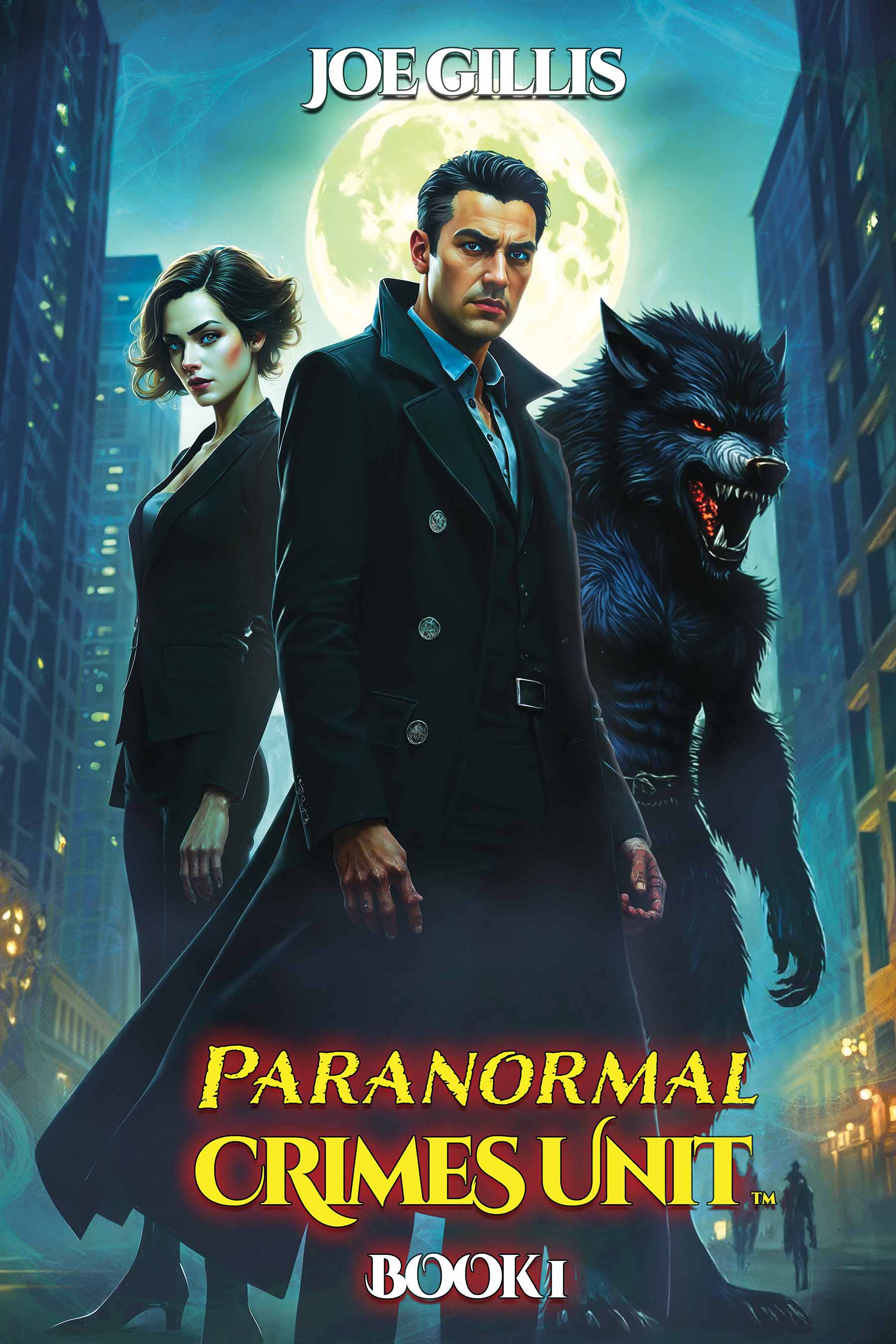
Detective Sam Kane spent six years avoiding supernatural cases. Now he's partnered with a vampire detective and a werewolf forensics expert, hunting whoever is killing desperate people seeking black-market vampire transformations.
The lore is centuries old. The newest chapter is being written right now.
Both series stand alone, but they share a universe. Pick your flavor of vampire story — or read both.
Bite Me, Billionaire Paranormal Crimes Unit